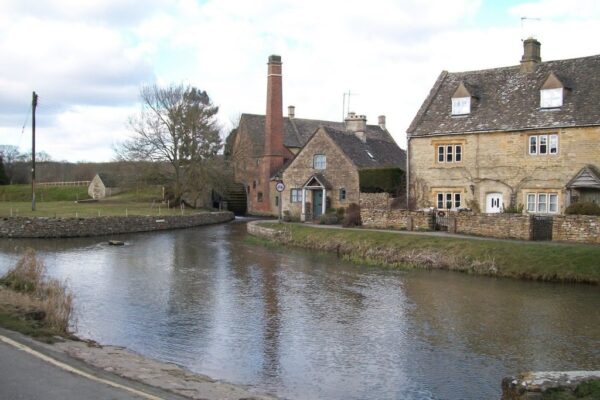
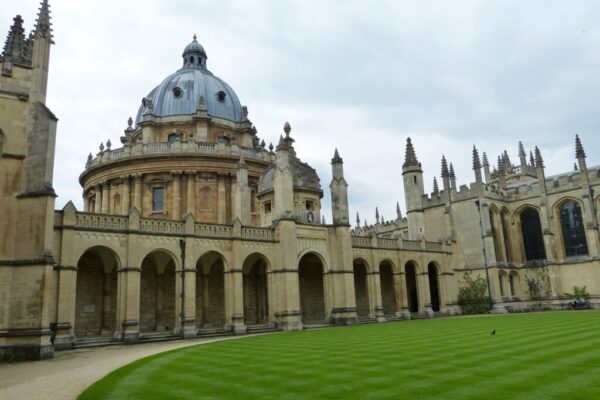
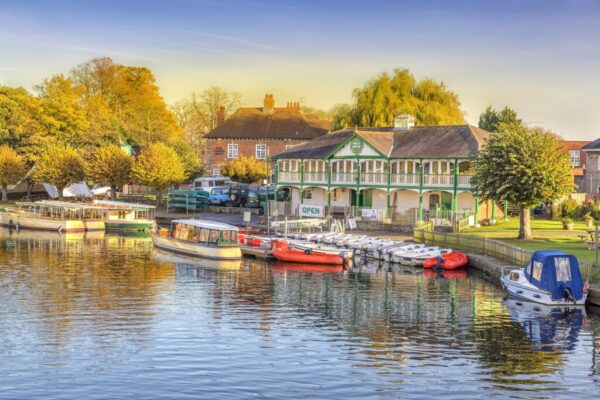
The Cotswolds is an ‘Area of Outstanding Natural Beauty’ totalling about 800 square miles. The very pretty landscape is that of gentle rolling hills through which rivers flow and quintessential English villages are situated.

The Cotswolds, designated an ‘Area of Outstanding Natural Beauty’ in 1966, is 800sq miles of gentle rolling hills through which rivers flow and quintessential English villages are situated. Built of locally quarried limestone, most of the cottages, manor houses and churches in these villages were erected between two and four hundred years ago.
There is evidence of human activity from the Stone Age with the 5000 year old burial mound Bellas Knap. Through to the Iron Age there are 30 Iron Age hill Forts, the best preserved being that of Old Sudbury.
The Romans built 3 main towns including Corinium, now Cirencester, where there is a museum and remains of an amphitheatre. When Christianity was introduced, many Abbey were built including those at Malmesbury, Tewkesbury and Winchcombe. The Abbeys possessed much agricultural land and it was the wool and cloth trade that created wealth to the area from the 13th to the 19th Century.
Many villages were built and comprised a Manor House for the local wool merchant who would endow a church and build cottages for the residents who carried out the various tasks from shearing sheep to weaving the wool into cloth.With the Industrial Revolution and cheaper fibres, in particular, Cotton, the wool industry of the cotswolds went into decline. Terrible for the residents of the 19th Century but great for us today.
Many of the villages are frozen in time and popular villages to visit include Burford, Stow on the Wold andBibury, which, according to William Morris, is ‘the loveliest village in England’.Plenty of pubs, restaurants,teashops, antique shops and Galleries.